

 In an attempt to be more inclusive and keep up with the ever-evolving state of gender literacy, dating site OKCupid has been testing a new range of gender and sexuality options for some of their users. New options that go beyond the standard Neapolitan trio of sexuality (gay, straight and bisexual), include pansexual, demisexual, heteroflexible, homoflexible, asexual and sapiosexual, among others. Gender has been expanded to include not only transgender, but also transmasculine, transfeminine, trans man, trans woman, intersex, non-binary, genderqueer and many more.
OkCupid’s not the only one getting on board the gender-variant bandwagon. Earlier this year Facebook expanded its gender options to include a ‘custom’ option that allows users to enter the term of their choice, choose their preferred pronoun and select which Facebook friends they feel comfortable being able to view their gender.

As more and more labels get added to the queer lexicon, the LGBT+ acronym is beginning to resemble a Welsh street sign. Some have expressed frustration at how difficult it is to keep up with all these new words, both within the queer community and outside of it. ‘Why are all these terms necessary?’ they cry. ‘Can’t we just throw all these labels to the curb and just be humans?!’
Well, yeah. I’m sure I’m not the only one dreaming of a utopia where everybody gets up in the morning and chooses whether they’ll wear a skirt or pants according to their mood, rather than what falls in line with whatever initial is printed on their passport. Where you can make out with anybody along the gender spectrum and you don’t have to worry about what it all means because it just means you’re a person who likes making out with people. Where gender neutral pronouns are the norm because there’s no point differentiating genders because gender has no affect on your abilities and talents or how you should dance or whether or not you should be wearing makeup. Where instead of being ‘gay’ or ‘straight’ you’re just ‘Bill’ or ‘Deborah’ or ‘Cleonetta von Glittertits III’ and the gender of your partner doesn’t affect whether or not you can get married or hold hands in the street and nobody asks me if my haircut is ‘anti-male’ and everybody gets a hot breakfast burrito delivered to their doorstep every morning.
Yeah. That’d be totally sweet. But unfortunately, we don’t live in a gender neutral world. Up until very recently, the dominant culture has been very heavily entrenched in a gender binary. Male and female have pretty much been seen as the only options, with each taking on certain roles due to their biological function in reproduction. This is the basis of the assumption that women are more nurturing and emotional while men are stronger and more suited to leadership. In Western culture, anything other than the two polar genders has mostly been seen as aberrant, peculiar or medically disordered. This dichotomy has presented itself not only in the way everyday facilities and activities are segregated into these two categories (male and female bathrooms, the way clothes are sold, the way sports are played and broadcast), but also the language we use, right down to the pronouns.
So why are all these new labels popping up now? It seems that the positive representation of gender and sexuality diverse people in mainstream culture is a very recent phenomenon. This isn’t because queer people have failed to exist until now, but because the social climate is rapidly changing and the gender binary is beginning to dissolve. The introduction of women into the workplace and continued advancement of female leadership call into the question the validity of previously ubiquitous gender-based assumptions. The development of various forms of contraception has removed from sex a great deal of the emphasis on reproduction, meaning that slowly but surely, the shame surrounding sex in our culture is being chipped away and sex for reasons other than baby-making (i.e. premarital hetero sex and, you guessed it, queer sex) is becoming less and less stigmatized.
And most recently, the development of the internet has allowed people to directly broadcast their own stories on a vast scale. Without the benefit of the Internet, many transgender and non-binary folks would have been isolated from like minded people, and lived their lives unaware that others such as themselves existed, or that there is a word for what they are.
Because when it comes down to it, words are crucial. The feeling of recognition when you hear a term that resonates with you triggers more than just a sense of belonging, it’s reassurance that you’re ok, that you exist, that what you are feeling is real and that other people are feeling it too. Words are how we attach legitimacy to everything from species of land-snail to mental illnesses. In our highly literate society, if there isn’t a word for something, it may as well not exist.
While it’d be great to live in a world where such distinctions aren’t necessary, it’s difficult to escape our history of rigid definitions. Until the fight for equality propels us into a gender neutral, breakfast burrito-abundant future some hundreds of years from now, our labels are how we claim our identities and share them with the world, and we are free to use them how we choose.
Gender and sexuality are not comprised of two polar opposite categories but a spectrum of identities with infinite variations that we have every right to try on and toy with as if they are fancy hats. Labels are very much like the clothes we wear; by no means an indication of our inner character, our values or goals, but nonetheless an expression of who we feel we are and what we wish to say to the world. These words do not define us inwardly any more than our clothing does, but are a strong indication to others of where we feel we belong. This being the case, we shouldn’t feel restricted to select just one option that works for us: we can modify how we present ourselves according to occasion and company. For example, I may prefer to use the term ‘queer’ in close company because I prefer its inclusivity but use ‘bisexual’ when I meet new people because it provides a more specific, immediate encapsulation of how I identify.
The expansion and swift evolution of the language we use to present ourselves to the world, and just how widespread and plentiful these new terms are demonstrates that slowly but surely, we are moving beyond the increasingly antiquated gender binary. I say we spread ourselves across the alphabet and into the various sets of Japanese characters. Let’s stretch and break and stitch up the language until it fits. After all, what else is it for?
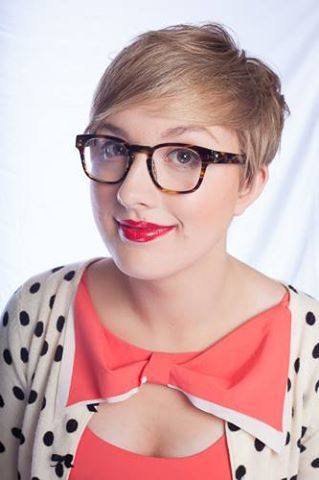
Sophie Joske